

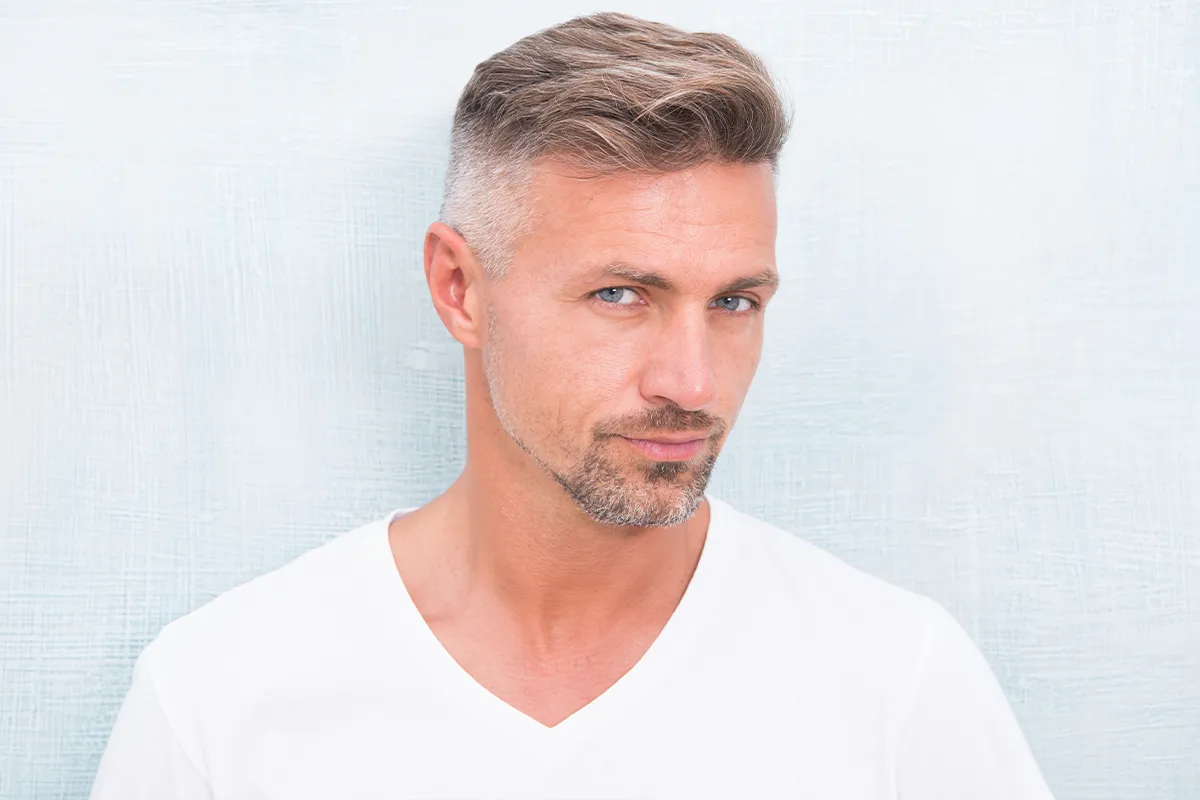
Quick Answer: A facelift for men addresses the same lower-face changes as any facelift, including jowls, a softer jawline, and loose neck skin. The difference is in the planning. Thicker skin, beard growth, sideburns, and receding hairlines all affect where incisions go, and many men want a sharper jawline without losing the character of their face.
More men are asking about facial rejuvenation than in years past. According to the American Society of Plastic Surgeons (ASPS), fading stigma has led more men to explore facial plastic surgery to look refreshed and keep a competitive professional presence. At my Palm Beach Gardens practice, a male facelift follows the same principles as any facelift I perform, adjusted for the anatomy and goals specific to men.
Key Takeaways About a Facelift for Men
- A facelift for men may improve jowls, a softened jawline, and loose skin along the lower face and neck.
- Thicker skin, facial hair, and hairline patterns all shape how a male facelift is planned.
- Incisions should preserve the sideburn and keep beard-bearing skin in a natural position.
- Men may have a higher risk of bleeding after surgery, so blood pressure control matters during recovery.
- Men with milder changes may get the improvement they want from a neck procedure or nonsurgical treatment instead.
What Can a Facelift Improve for Men?
A facelift lifts the lower third of the face. For men, it may help with:
- Jowls that blur the jawline
- Loose skin along the jaw and neck
- Sagging in the cheeks
- Deep folds from the sides of the nose to the corners of the mouth
During the procedure, I tighten and reposition the underlying muscles and tissues, then redrape the skin and remove the excess. The same ASPS article describes the goals of a male facelift as often centering on the jawline and neck, with sharper definition and less laxity.
A facelift won’t remove forehead lines, crow’s feet, or bags under the eyes. Mayo Clinic also notes that it doesn’t treat fine lines or sun damage. If those areas bother you, I can address them at the same time with eyelid surgery or a browlift. For the small wrinkles of the face, additional resurfacing procedures such as Venus Nano are available. We start these after the initial recovery period, though sometimes patients will have such treatments a few years before they choose to do face/neck lift surgery.
How Does Male Facial Anatomy Affect Facelift Surgery?
Men and women both lose skin elasticity with age, but male anatomy changes how a facelift is planned. In an ASPS article, one plastic surgeon noted that men tend to have thicker skin and a squarer face, while women more often have an oval face shape. Another plastic surgeon in the same article observed that men may bleed more during surgery.
The ASPS article on male facial surgery points to a few other factors that shape the technical plan:
- Facial and neck skin is generally thicker.
- Beard-bearing skin has to be handled carefully.
- Hairlines may continue to recede with age.
This is why I evaluate skin elasticity, muscle tone, and bone structure before recommending a plan. For many men, a strong, square jaw is worth preserving, so the aim is to sharpen the jawline rather than soften it.
How Do Beards and Hairlines Affect Facelift Scars?
Incision placement takes extra thought in men. Short hair and facial hair leave fewer places to hide a scar, and a hairline can keep changing for years after surgery. A standard facelift incision starts inside the hairline at the temple, follows the natural crease in front of or just inside the ear, and continues around the earlobe to behind the ear. In men, that path is adjusted around the beard, the sideburn, and the hairline.
Beard Growth and Sideburn Placement
A facelift lifts and redrapes the skin, and in men much of that skin grows hair. Without careful planning, beard-bearing skin can end up in an unnatural spot, such as on the ear. In the ASPS article on male facial surgery, one plastic surgeon explains that incisions should preserve the sideburn and keep hair-bearing skin from shifting toward the ear, with scars placed around the ear and along the natural hairline.
A beard can also help during recovery. In the other ASPS article, one plastic surgeon noted that growing a beard may help disguise bruising while you heal.
Receding Hairlines and Short Hair
Many women can cover healing incisions with longer hair, while many men can’t. In an ASPS article, one plastic surgeon noted that men may feel more anxious about recovery when they don’t have long hair or makeup to conceal incisions.
The hairline matters long term too. A hairline that recedes after surgery could expose a scar placed too close to its edge. One plastic surgeon in the ASPS article on male facial surgery notes that incisions may need to sit farther into the hairline or temple area so they stay discreet as a patient ages. That’s why your current hairline, and how it may change, is part of incision planning.

How Are Natural-Looking Male Facelift Results Planned?
Many men worry about looking pulled or obviously operated on. The ASPS also notes that men often want subtle improvement that keeps their masculine features, so they look rested rather than noticeably different. A male facelift also generally avoids the softer contours and added cheek volume that may suit some female patients.
My approach is conservative. I plan each facelift around your facial structure, the way your face has aged, and your goals, with the aim of enhancing your natural look rather than changing it. During your consultation, I’ll show you before-and-after photos of patients with similar concerns so you can see what a facelift may realistically achieve.
It also helps to know what you want to keep. One plastic surgeon in the ASPS article on male facial surgery notes that many men prefer to retain some facial lines rather than achieve a perfectly smooth look. Talking through those preferences early helps shape a plan that fits you.
What Is Recovery Like After a Male Facelift?
Recovery after a male facelift follows the same general course as any facelift. Bruising and swelling last a few days, and discomfort is usually mild and can be managed with oral medication. I remove the bandages in my office a day or two after surgery, and you can then shower and wash your hair. Sutures may come out in stages to help minimize scarring.
The ASPS notes that most patients can return to light daily activities by the end of the first week. Many people feel comfortable around strangers at about two weeks and with friends at about three weeks. It can take 10 to 12 weeks for the face to feel completely normal.
During recovery:
- Avoid direct sun for several weeks.
- Hold off on exercise and strenuous activity until you’re cleared.
- Follow your blood pressure and medication instructions closely.
What Facelift Risks Should Men Consider?
The main facelift risks are the same for men and women. They include hematoma (a buildup of blood under the skin), scarring, nerve injury, hair loss around the incisions, and skin loss, along with bleeding, infection, and a reaction to anesthesia. Mayo Clinic notes that hematoma is the most common complication, while nerve injury and skin loss are rare. Dr. Pane cautions men in particular to be careful about not undertaking heavy physical activity too early in the recovery period.
Your own risk depends on your health and circumstances. Mayo Clinic lists several factors that may raise the risk of complications or affect your results:
- Taking blood thinners or certain supplements
- Smoking
- Poorly controlled high blood pressure or diabetes
- Repeated weight gain and loss
The ASPS notes that men may have a higher risk of bleeding after surgery, which makes blood pressure control and activity restrictions especially important. That doesn’t mean every man faces the same level of risk. Before surgery, we review your health history and medications so your plan reflects your individual circumstances.
When Might a Man Not Need a Facelift?
If your jawline still holds its shape and your main concern is a heavy neck, a neck procedure may be enough. In an ASPS article, one plastic surgeon noted that some men are only concerned about loose skin under the chin, which can sometimes be removed under local anesthesia in the office.
Men with early signs of aging may also start with nonsurgical options. My practice offers Botox, dermal fillers, and nonsurgical neck tightening. The ASPS also notes that nonsurgical treatments may not replicate what surgery does when there is significant sagging or excess skin. A consultation can help sort out which category you fall into.
Frequently Asked Questions About Male Facelifts
Discuss a Male Facelift With Dr. Pane
If jowls, a softer jawline, or loose neck skin make you look more tired than you feel, a consultation can help you decide whether a facelift makes sense. At my Palm Beach Gardens practice, I evaluate your skin elasticity, muscle tone, and bone structure, then explain which options may fit your goals. Scheduling a consultation doesn’t commit you to surgery.
To get started, contact my office or call 561-422-4116.